My Bio
Dr. François Ricles Gracia
Artist • Ophthalmologist • Sculptor • Scientific Illustrator
Dr. François Ricles Gracia (born December 7, 1940, in Limbé, Haiti) is a Haitian-born multidisciplinary visual artist whose work spans painting, sculpture, and scientific illustration. Deeply rooted in Caribbean history and culture, his artistic practice reflects more than seven decades of lived experience, visual memory, and disciplined observation-bridging the worlds of medicine, fine art, and cultural preservation.
Gracia began painting at the age of seven, encouraged by early mentors including his neighbor, the renowned Haitian artist Marcel St. Vil, as well as family members who nurtured his creative curiosity.
His formative years in Limbé and Cap-Haitien immersed him in the rhythms of rural and urban Haitian life-communal farming (kombit), Vodou ceremonies, festivals, markets, and everyday scenes that would later become central themes in his work. By the age of eighteen, he had already participated in his first national art exhibition in Haiti.
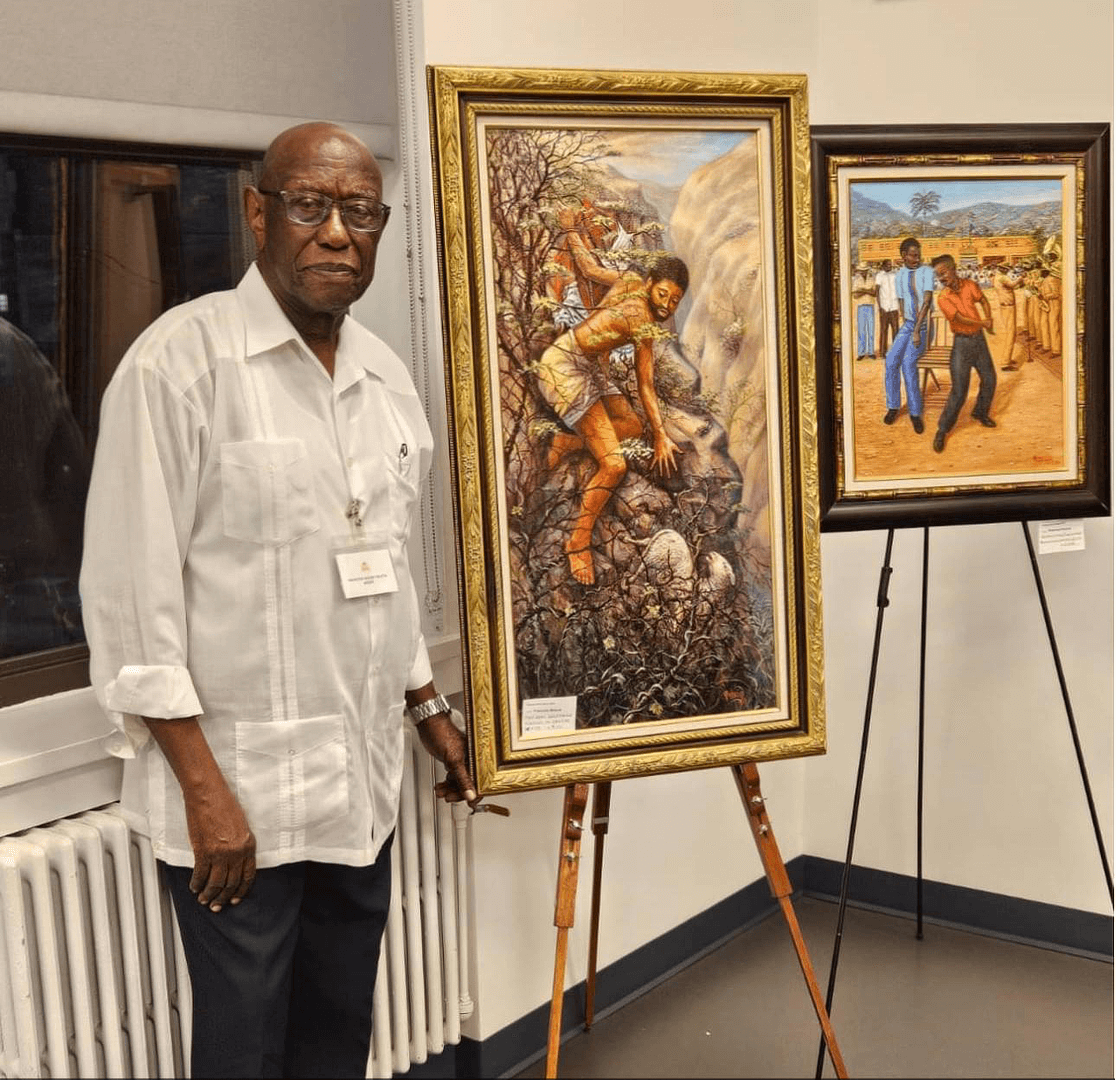
In 1964, Gracia traveled to Spain to pursue medical studies, enrolling at the University of Seville and the School of Medicine of Cádiz, where he specialized in Ophthalmology. While establishing a distinguished medical career, he continued to refine his artistic training in Europe, studying painting, sculpture, and ceramics under Spanish masters. His keen anatomical knowledge and exceptional draftsmanship led him to collaborate extensively as a scientific illustrator, notably with Professor Juan del Rey Calero. This dual discipline-medicine and art-sharpened his precision, realism, and deep sensitivity to form, light, and human expression.
Throughout his career, Gracia balanced his medical profession with a lifelong devotion to art. After retiring from medicine in the United States, he returned fully to his first passion, dedicating himself entirely to creative expression. His artistic vision is informed not only by technical mastery but also by spiritual reflection, ethical inquiry, and cultural memory. His works capture the dignity, resilience, struggles, and joy of the Haitian people, rendered through vivid still lifes, rural and urban scenes, expressive portraits, symbolic compositions, and sculptural forms.
Gracia's artistic style is defined by a harmonious fusion of Neoclassicism, Lyrical Romanticism, and Symbolism. His compositions are highly detailed and realistic, yet infused with imagination and emotional depth. Whether portraying Vodou rituals, countryside labor, or allegorical themes of liberation, faith, and humanity, his work seeks to elevate collective memory and inspire reflection. He describes his creative process as a balance between disciplined structure and spiritual surrender, often beginning and ending his work in prayer.
His artwork has been recognized and awarded internationally and is held in private and public collections across Spain, Switzerland, France, Italy, the United States, Canada, Brazil, Venezuela, Peru, Haiti, Guinea, and other West African countries. In addition to his fine art, Gracia's medical illustrations have been published in professional scientific references, including the Medical Iustration Source Book.
Fluent in French, English, Spanish, and Haitian Creole, François Ricles Gracia embodies a truly transnational and interdisciplinary legacy. His life's work stands as a testament to the power of art as both witness and healer-an enduring bridge between science and spirit, memory and imagination, heritage and humanity.